Point-of-Care Human Trafficking Response
JUST IN TIME
Human Trafficking Recognition & Response
Help providers recognize and respond
when the moment matters most.
A mobile-first tool that gives healthcare teams immediate access to human trafficking indicators, response steps, localized resources, and audience-specific support pathways.
The recognition gap
There are over 1 Million victims of human trafficking in the US.
Even though 90% of victims are seen by healthcare providers up to 15–17x,
fewer than 1% are identified.
And here's why…
Providers are uncertain about the INDICATORS
They are already seeing the signs. They just don't know if it is trafficking or not.
They don't know the PROTOCOL
to activate or follow in their local healthcare setting, and…
They don't know the LOCAL RESOURCES
in their community they can call on to provide additional support
THE CRITERIA
Human trafficking response cannot depend on memory, timing, or luck.
Training is not enough
75% of training is forgotten within a week So while it increases general awareness, providers need more real support in the actual moment of care.
They may only have one chance
Clinical teams often have only minutes with each patient. Just In Time puts critical guidance within reach during the encounter.
All staff must be ready
Patients interact with more than providers. Front desk staff, nurses, security, social workers, and community-facing teams may see indicators — and need a clear, trusted response path.
The stakes are extremely high
Failure to identify and respond appropriately can create clinical, legal, regulatory, and reputational exposure.
Trust is vital
Potential victims may not be ready to disclose. The tool can provide private access to help and self-reporting options.
The response must be in person
Local resources, referral pathways, and response information can be made easier to access and keep current.
The Solution
Training + In-the-Moment Guidance
JUST IN TIME
Just In Time extends world-class training into real-world care by leveraging patented, mobile technology to enable immediate access to indicators, protocols, guidance, and local resources.
01 — TRAINING AND INDICATORS


Provider-only content unlocks clear, immediate guidance that is not visible to patients or the public — no folders, PDFs, or outdated training materials needed.
02 — PROTOCOL
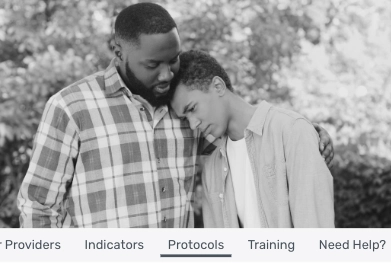

Protocols are customized to your organization, state laws, and patient type — with specific response steps for minors versus adults.
03 — LOCAL RESOURCES

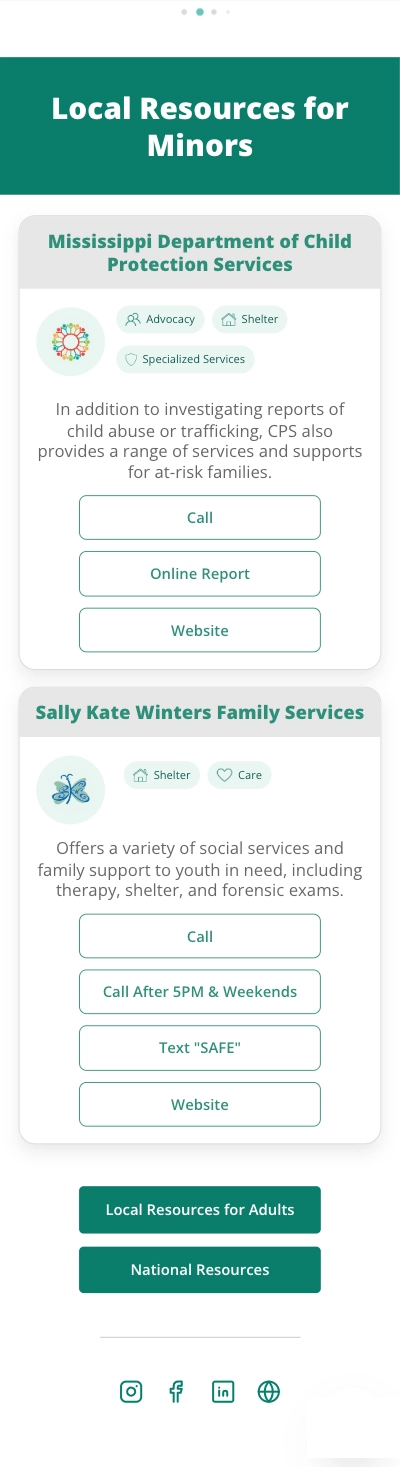
Trusted local resources for in-the-moment action — focused on the first call, specific to your location, and tailored for adults versus minors.
How it's accessed
Posted at clinical workstations
Where: QR codes placed at nurse stations, exam rooms, triage areas, and on badge cards.
Who: Scanned by physicians, nurses, social workers, and clinical staff during patient encounters — no app download, no login.
PROVEN IMPACT WITH REAL TEAMS
Proven results.
"Just In Time is transforming the way health care systems respond to human trafficking."
US CHAMBER OF COMMERCE
CASE STUDY IMPACT STATS
MEASURED IMPACT
783%
Increase in confidence
when working with patients suspected of human trafficking.
MEASURED IMPACT
91%
Aware of protocols
for addressing potential trafficking cases.
MEASURED IMPACT
182%
Increase in readiness
to connect potential victims with community-based organizations for additional support.
"We found that providers often sensed something was wrong, but didn't know what to say, what signs mattered most, or what to do next. Just In Time changed that immediately. It was easy to deploy, simple to access, and gave staff real support in the moment care was happening. In the very first week, staff began identifying cases and felt empowered in situations that previously felt overwhelming."
AMY BOGUE, CEO, ALLEGRO FAMILY CLINICS
COMMUNITY IMPACT & REACH
Extend trusted guidance beyond your walls.
The same patented QR code or smart link can support providers, patients, and the broader community — delivering the right guidance, training, indicators, instructions, and local resources to each audience instantly.
Organizations can expand awareness and preparedness without exposing internal protocols, adding implementation burden, or requiring app downloads.
01 — PATIENT SUPPORT
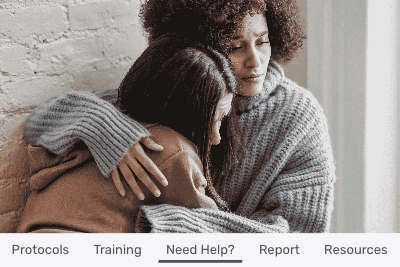

Private, immediate access to help, local resources, and safety planning.
02 — COMMUNITY AWARENESS
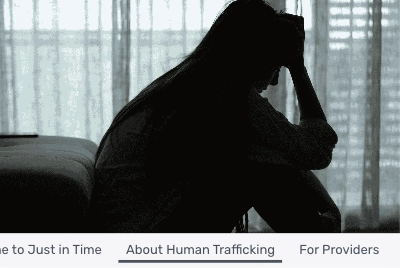
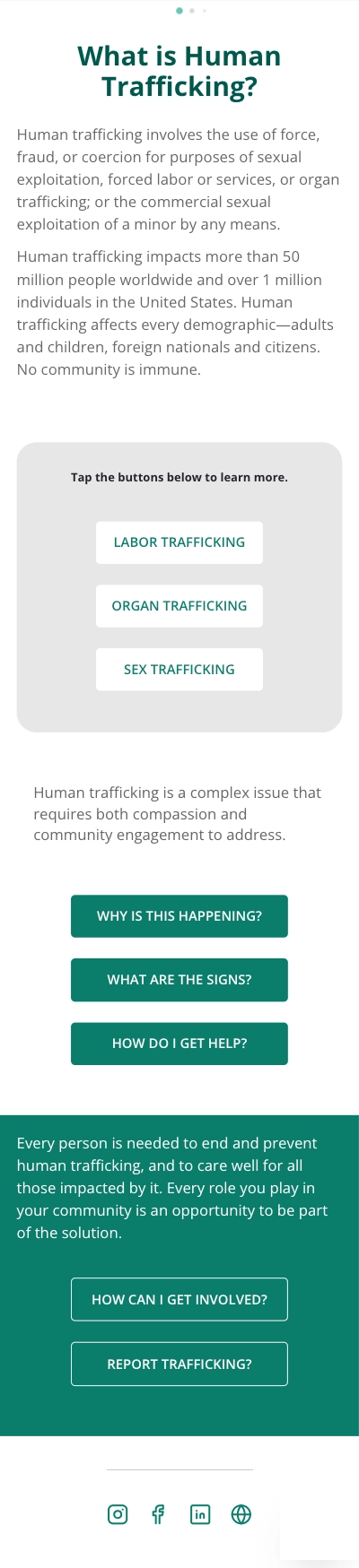
Shareable education that helps communities recognize risks and respond earlier.
03 — RESPONSE GUIDANCE

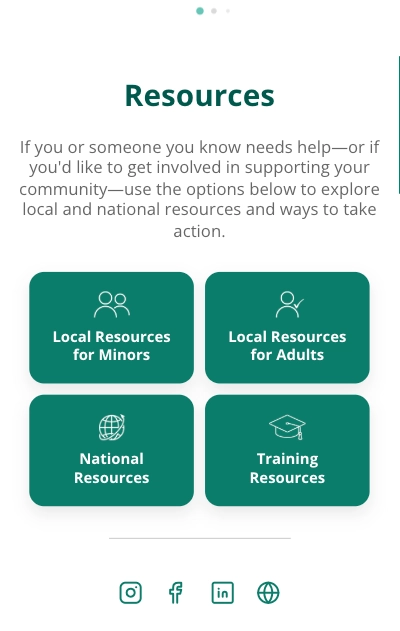
Clear indicators, conversation guidance, and response instructions available in the moment they are needed.
How it's distributed
Discreetly placed and organically shared
Where: QR codes on signage inside restroom stalls and private spaces, awareness campaign materials, provider hand-offs, community events, partner organizations, and outreach flyers.
Who: Scanned discreetly by patients and community members, and shared organically by providers, advocates, and neighbors — no app download, no login.
ALL ACTION. NO BARRIERS.
System-wide preparedness without system-wide complexity.
A scalable response infrastructure designed to extend preparedness, guidance, and community impact across organizations and into communities — without adding operational complexity.
Risk Reduction
Consistent, in-the-moment guidance helps reduce uncertainty, improve response consistency, and lower organizational exposure.
Operational Leverage
Extend trusted training and response support across departments, teams, and community-facing staff without increasing administrative burden.
Workforce Preparedness
Anyone interacting with a patient may recognize indicators. Just In Time helps teams respond with shared guidance and trusted response pathways.
Measurable Engagement
Track access, utilization, engagement patterns, and resource interaction across audiences and locations.
Expert-Guided Implementation
Our experts work with your team to customize branding, content, protocols, and resources. This builds skills and knowledge internally and reduces the cost, delay, and complexity of traditional implementations.
Compliance & Readiness
Supports training, preparedness, and response readiness initiatives with accredited education and in-the-moment guidance.
IT-Free Implementation
- Intuitive dashboard for content management and analytics
- No apps to deploy or download
- No EHR integration
- No PHI storage
Enterprise Ready
- Fully white-labeled
- Multi-site & multi-tenant ready
- Supports providers, patients, and public audiences simultaneously
Community Impact
- PR and marketing materials enable effective distribution of Just In Time to your patients and community, with your branding and messaging.
- Patented multi-language delivery
- Organically sharable, increasing awareness and impact and ensuring consistent and accurate information delivery.
Operational & Economic Value
Less than $1 per provider per day can support preparedness, improve utilization, reduce implementation burden, and strengthen response readiness system-wide.
A lightweight deployment model improves preparedness and response readiness without the cost, delay, and complexity of traditional integrated systems.
Just In Time Human Trafficking Response
Give your teams the right guidance before the moment is missed.
Let's talk about how Just In Time can help your organization move from awareness to action with mobile-first guidance, audience-specific support pathways, and measurable engagement at the point of need.